• Skip to primary navigation
  • Skip to main content
Ningaloo Turtle Program/ Cape Conservati

Ningaloo Turtle Program/ Cape Conservati

Conservation of Marine Turtles and Their Associated Habitats

  • Home
  • About
    • Track Monitoring
    • Training
    • Ningaloo Reef
  • Volunteering
    • Volunteer Life
    • Dates and Costs
    • Volunteer Reviews
    • Positions
      • Volunteers
      • Team Leaders
      • Communications Intern
      • Local Exmouth volunteers
  • Jurabi Turtle Centre
    • Turtle Eco-Education Tour
    • Self-guided visits
  • Media
    • Videos
    • Gallery
    • 2022 School Posters
  • Resources
    • Turtles of Ningaloo
      • Hatchlings
      • Threats to Ningaloo’s Turtles
      • Green Turtles
      • Hawksbill Turtles
      • Loggerhead Turtles
    • Reports & Publications
    • Links
  • Show Search
Hide Search
Home/Jurabi Turtle Centre/Self-guided visits

Self-guided visits


Seeing turtles is a phenomenal experience.
Here’s how to do it safely. For you, and the turtles.


Before coming to the beaches:
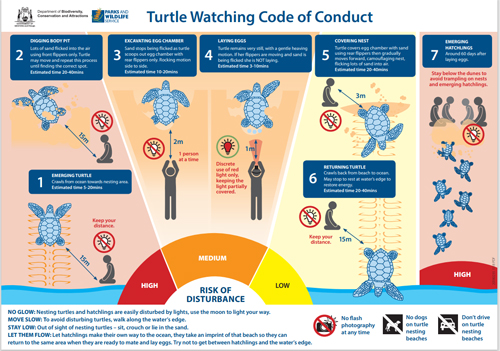
Check out our Turtle Watching Code of Conduct.

No Glow, Move Slow, Stay Low, Let Them Flow


Turtle Vision

Marine turtles don’t have the best eyesight out of the water.

If we stay still, and keep our distance it’s very likely a turtle won’t know you are there.

That’s why it’s important to remember, when you see a turtle on the beach;

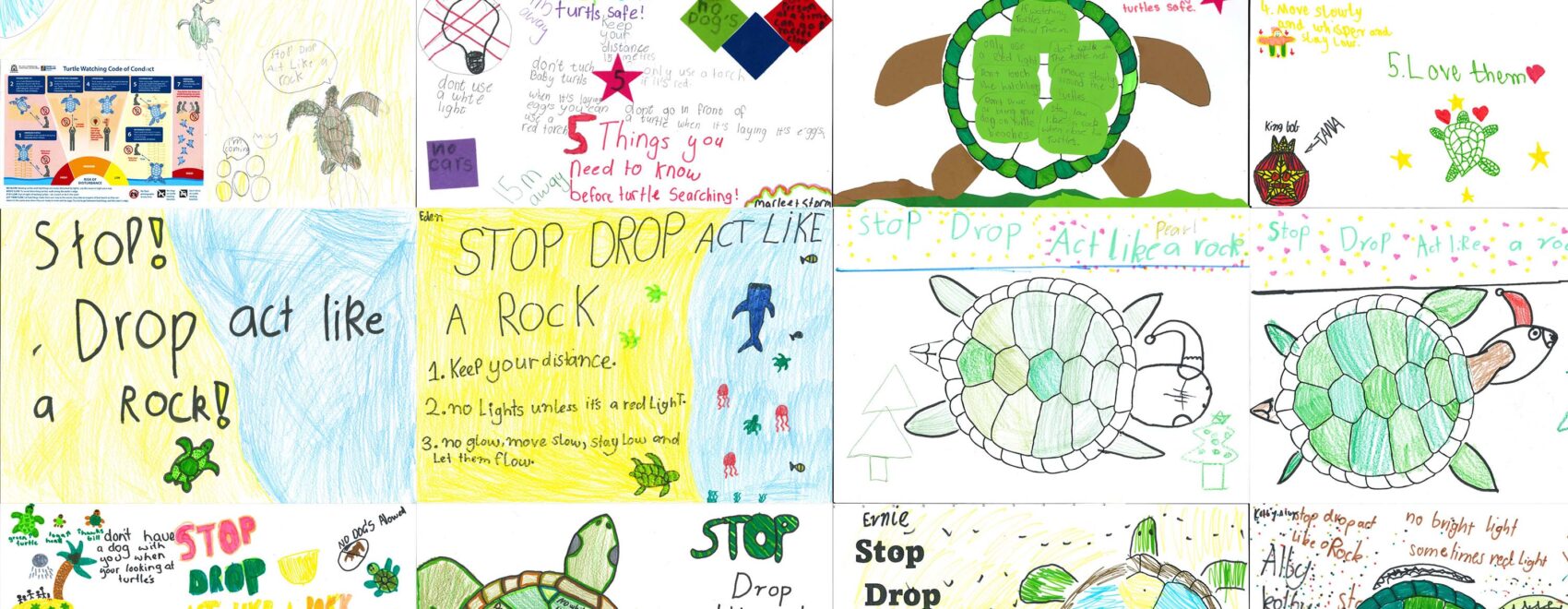
STOP, DROP, ACT LIKE A ROCK.


No Glow!

Marine turtles are extremely sensitive to light.

Torches and flash photography can be extremely distressing to turtles, even red light can be disturbing. It’s important we let our eyes adjust when on the beach at night. Use the moonlight and starlight to light the beaches for you.

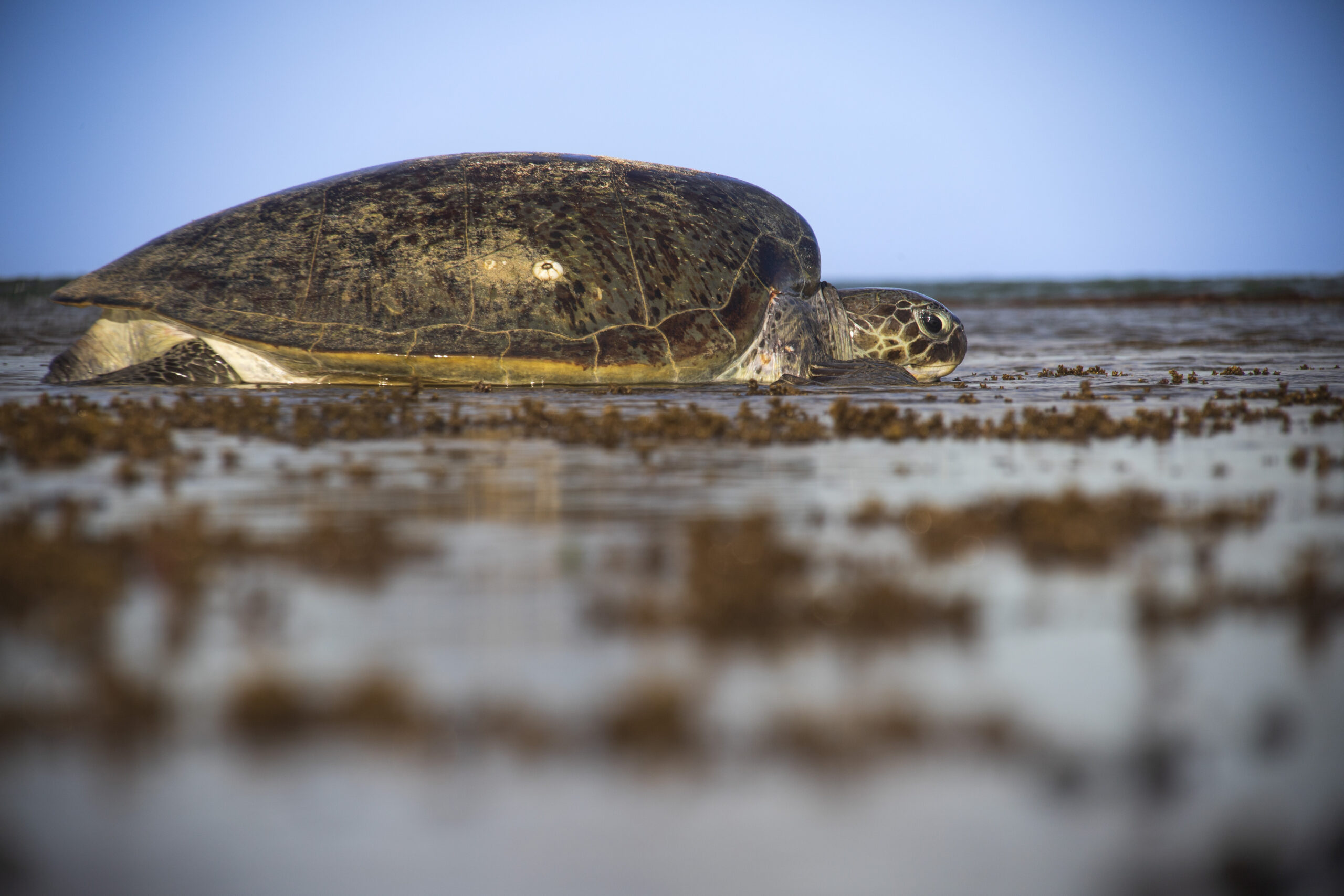
To take this photo we used a Canon 6D Mrk II with a Samyang 1.5/24mm lens. An ISO of 2500, an aperture of around 2.8, with a shutter speed of 30 seconds.

Disturbed turtles may release their eggs in the ocean.
Not only does this kill the eggs, it wastes an enormous amount of energy for the turtle.
Nesting failures are an extra pressure on these endangered animals.


Hatchlings

If you are lucky enough to see hatchlings on the beach it’s important you remember,

Let Them Flow!
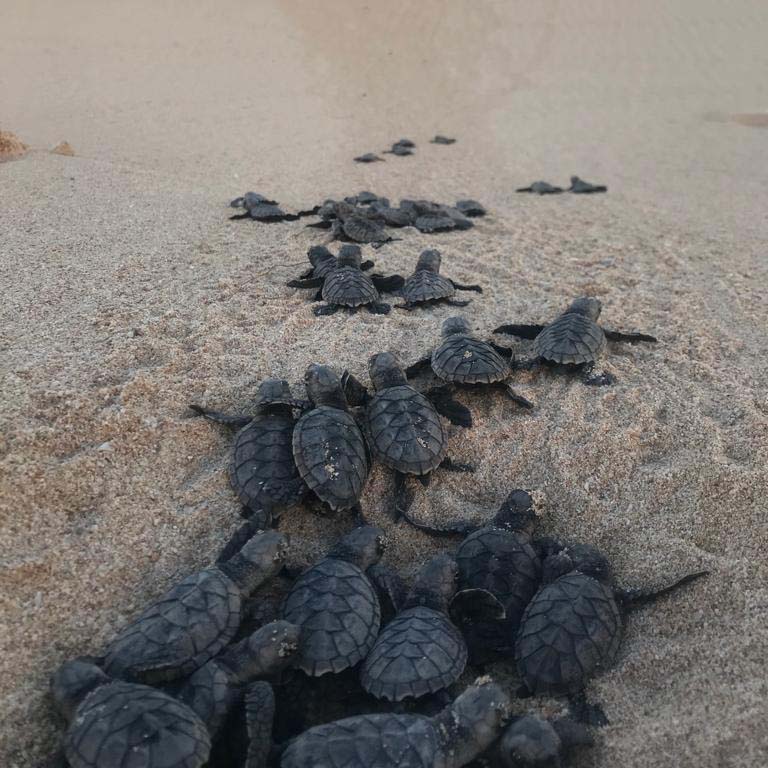
Find out more about hatchling turtles here.


Footer

Ningaloo Turtle Program

PO Box 201
Exmouth
WA 6707

Ph: + 61 8 9947 8000
Email: ningalooturtles@dbca.wa.gov.au

Ngarnurra nhuna nhugurarrima Baiyungu, Thalanyji and Yinigurdira ganyarajarri thanardi ngarrari

We acknowledge Baiyungu, Thalanyji and Yinigurdira People as the original custodians of the land and water we manage

The Ningaloo Turtle Program appreciates the significant financial  contribution made by Woodside Energy and its joint venture participants Mitsui E & P Australia, Santos and Inpex. We thank them for their ongoing contribution.

Keep In Touch

  • Facebook
  • Instagram
  • YouTube
  • About
  • Volunteering
  • Jurabi Turtle Centre
  • Media
  • Resources